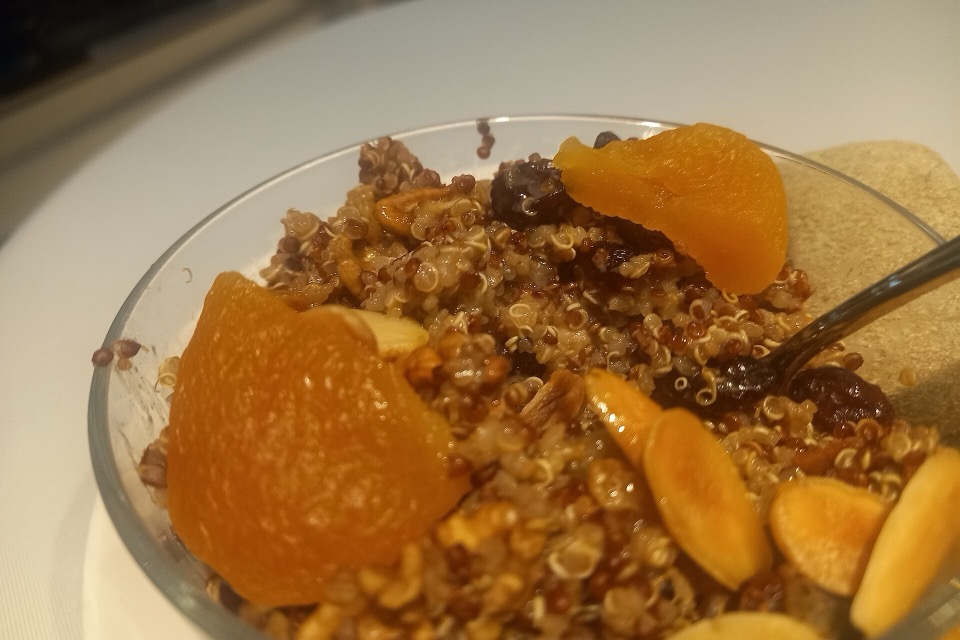
How to Cook Quinoa So It Turns Out Fluffy, Not Mushy
Quinoa turns gummy or bitter when it is cooked with too much water, left unrinsed, or fluffed before it rests. Learn the rinse-toast-simmer-rest method with a 1:1.75 grain-to-water ratio for separate, nutty grains every time.
Why Quinoa Turns Out Mushy or Bitter
Quinoa cooks like a grain but behaves like a seed, and it fails in two predictable ways. The first is texture: most package directions call for a 1:2 ratio of quinoa to water, which is simply more liquid than the seeds can absorb in a normal simmer. The excess water sits in the pot, the outer germ ring of each seed bursts, and you end up with a gummy, porridge-like mass instead of distinct pearls. The second failure is flavor. Each quinoa seed wears a natural coating called saponin, a bitter, slightly soapy compound the plant produces to deter pests. Skip rinsing and that coating dissolves straight into your cooking water.
Two smaller mistakes compound the problem. Stirring quinoa while it simmers breaks the fragile outer structure and releases starch into the pot, and fluffing it the second the timer rings lets trapped steam collapse onto wet grains. Quinoa is forgiving once you treat it like rice: control the water, leave it alone while it cooks, and let it rest before touching it.
Rinse, Toast, and the Right Water Ratio
Always rinse quinoa, even when the box says pre-washed. Thirty seconds under cool running water in a fine-mesh strainer—quinoa seeds are small enough to slip through a regular colander—removes nearly all surface saponin and any dusty residue. Swish the seeds with your fingers while the water runs so every grain gets washed.
For water, ignore the 1:2 package ratio and use 1 cup quinoa to 1¾ cups water. That quarter-cup difference is what keeps the grains distinct instead of waterlogged. If you want a deeper, nuttier flavor, toast the drained quinoa in the dry saucepan over medium heat for 2 to 3 minutes, stirring until it smells warm and roasted, before adding the liquid. Cooking in low-sodium broth instead of water is an easy upgrade when the quinoa is destined for savory bowls, and seasoning the cooking liquid with a small pinch of salt works the same way it does for pasta or rice.
Step-by-Step Fluffy Quinoa Method
Grain, Liquid, and Yield Chart
| Dry Quinoa | Water or Broth | Simmer Time | Approximate Yield |
|---|---|---|---|
| ½ cup | ⅞ cup (just under 1 cup) | 13–15 minutes | ~1½ cups cooked |
| 1 cup | 1¾ cups | 15 minutes | ~3 cups cooked |
| 1½ cups | 2⅝ cups | 15–17 minutes | ~4½ cups cooked |
| 2 cups | 3½ cups | 17–18 minutes | ~6 cups cooked |
White quinoa cooks on the times above. Red and black quinoa have slightly thicker seed coats and often need 2 to 4 extra minutes of simmering plus a splash more water; their firmer bite is an advantage in salads where you want the grains to hold their shape.
Using and Storing Cooked Quinoa
Properly cooked quinoa holds a pleasant pop for 4 to 5 days refrigerated in an airtight container, which makes it one of the most useful make-ahead bases in a healthy kitchen. Fold warm quinoa into bowls built from sturdy make-ahead lunches, stir it into soups for body, or use it as the protein-rich base under a pile of everyday meals boosted with extra vegetables. Cooked quinoa also freezes well: spread it flat in a freezer bag, press out the air, and freeze up to 2 months—reheat straight from frozen with a splash of water, the same approach used for safely freezing cooked rice.
Common Quinoa Mistakes and Fixes
Mushy quinoa: the pot had too much water or simmered too long. Spread the batch on a sheet pan and let it steam off for 10 minutes; it can still serve as a base for patties or porridge. Crunchy, underdone quinoa: the lid leaked steam or the simmer was too low. Add 3 tablespoons of water, cover, and steam 5 more minutes. Bitter taste: the saponin was not rinsed away; there is no fix after cooking, so rinse thoroughly next time. Grains clumped together: stirred during cooking or fluffed too early. Next batch, keep the lid down for the full 15 plus 5 minutes.
Key Takeaway
Rinse the saponin off, cook 1 cup quinoa in 1¾ cups water, simmer covered 15 minutes without peeking, rest 5 minutes off the heat, and fluff with a fork for separate, nutty grains that keep for days.
Sources:
- USDA MyPlate — Grains Group: Make Half Your Grains Whole (U.S. Department of Agriculture)
- USDA FoodData Central — Quinoa, Cooked (U.S. Department of Agriculture)