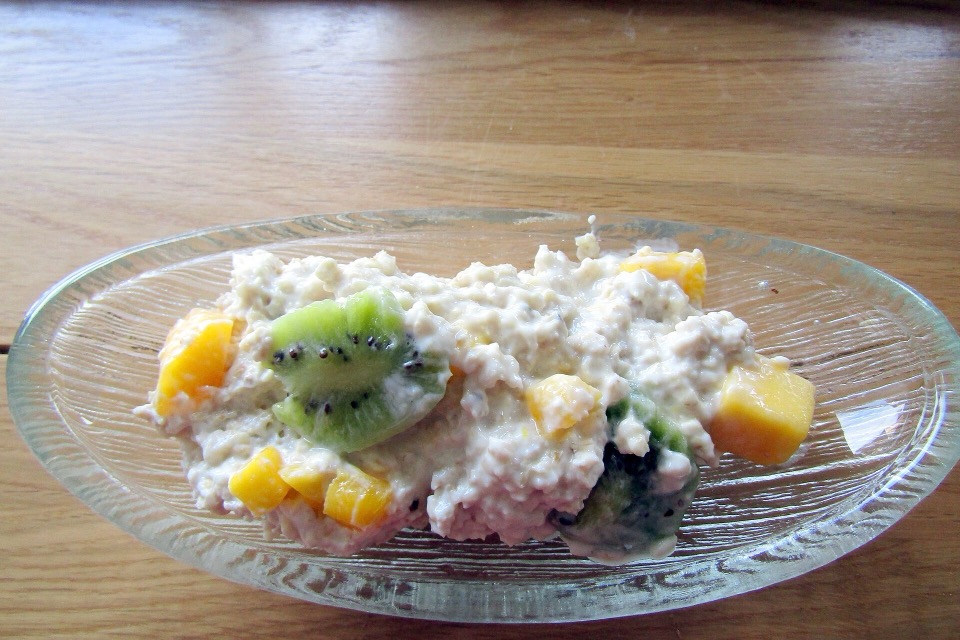
How to Meal Prep Overnight Oats for the Week
Overnight oats need no cooking—just a 1:1 ratio of rolled oats to milk soaked in a jar overnight. Learn the base formula, five flavor builds, how long jars safely keep, and how to prep a whole week in 15 minutes.
The Base Ratio That Always Works
Overnight oats are raw oats softened by soaking rather than cooking, and the method succeeds or fails on one ratio: 1 part old-fashioned rolled oats to 1 part liquid—most reliably ½ cup oats to ½ cup milk for a single serving. From there the formula flexes. Stirring in 2 tablespoons of plain yogurt adds creaminess and protein, 1 tablespoon of chia seeds thickens the jar into a pudding-like consistency as the seeds gel overnight, and a small pinch of salt plus a teaspoon of maple syrup or honey rounds out the flavor.
The texture at 1:1 lands soft but defined. For a looser, drinkable bowl, go to 1:1¼; for a dense, almost sliceable jar (good with chia), stay at 1:1 and let the seeds absorb the excess. Either way, the oats need at least 4 hours of cold soaking to hydrate—overnight is ideal, which is where the name comes from.
Choosing the Right Oats and Liquid
Oats: use old-fashioned rolled oats. They soften into a pleasant, slightly chewy texture overnight. Quick oats work in a pinch but turn mushy past 8 hours, and steel-cut oats stay tough and gritty without cooking—if steel-cut is what you have, the grains need a 5-minute simmer first or they never fully soften in the fridge. Liquid: dairy milk, soy milk, oat milk, and almond milk all hydrate oats equally well; soy and dairy milk contribute the most protein per cup. Plain yogurt thinned with a splash of milk makes the richest jar. Water works but produces a flat, watery result unless you compensate with yogurt and fruit.
Step-by-Step Sunday Jar Assembly
Five Flavor Builds to Rotate
| Flavor | Mix-Ins at Assembly | Toppings Before Eating |
|---|---|---|
| Classic Berry | ½ tsp vanilla + 1 tsp honey | Fresh berries + almonds |
| Apple Cinnamon | ¼ cup grated apple + ½ tsp cinnamon | Walnuts + extra cinnamon |
| Peanut Butter Banana | 1 Tbsp peanut butter stirred into milk | Sliced banana + chopped peanuts |
| Cocoa | 1 tsp cocoa powder + 1 tsp maple syrup | Dark chocolate shavings + berries |
| Tropical | Coconut milk as the liquid | Diced mango + toasted coconut |
Storage Times and Food Safety
Prepared overnight oats keep about 4 days in a refrigerator held at 40°F or below, consistent with FoodSafety.gov cold-storage guidance for prepared perishable foods. Jars made Sunday cover Monday through Thursday comfortably; for Friday, either prep a second mini-batch Wednesday or accept that a day-5 jar is a gamble on freshness rather than safety. Keep jars sealed and cold—an overnight-oats jar sitting on a desk past two hours enters the temperature danger zone just like any dairy-based food, so treat it with the same common sense used for packed make-ahead lunches.
Watch mix-ins that shorten shelf life. Mashed banana and grated apple brown by day three even though they stay safe; add them to the jars you will eat first. Fresh berries hold for the full window, while nuts and granola keep indefinitely—but only if they stay dry, which is why they belong in a separate container until serving. Labeling lids with a strip of tape and the prep date removes all guesswork when the jars start looking identical by Wednesday.
Common Overnight Oats Mistakes
Using steel-cut oats raw: they never soften in cold liquid—cook them first or choose rolled oats. Skipping the stir: dry pockets of oats and clumped chia sink to the bottom; stir until every grain is wet. Adding crunchy toppings at assembly: granola and nuts go soggy overnight—pack them separately or add at the table. Oversweetening: the jar tastes sweeter cold than the mixture does warm, so start light and adjust. Ignoring the salt pinch: even ⅛ teaspoon per jar makes the oats taste like breakfast instead of paste. And if mornings stay rushed, pairing oat jars with a balanced smoothie formula covers two no-cook breakfasts from one prep session.
Key Takeaway
Mix ½ cup rolled oats with ½ cup milk plus yogurt, chia, salt, and a little sweetener in sealed jars; refrigerate overnight, keep toppings separate, and eat within 4 days for effortless prepared breakfasts all week.
Sources:
- USDA MyPlate — Grains Group (U.S. Department of Agriculture)
- FoodSafety.gov — Cold Food Storage Chart (U.S. Department of Health and Human Services)