How to Poach Chicken Breasts So They Stay Tender
Poached chicken turns rubbery when the liquid boils instead of gently shimmering. Learn how to hold poaching liquid at 160–180°F, build flavor with aromatics, and pull chicken at exactly 165°F for tender, sliceable breasts.
Why Poached Chicken Turns Rubbery
Poaching sounds foolproof—submerge chicken in liquid and cook—yet it produces some of the worst chicken in a home kitchen when the liquid boils. Muscle fibers in chicken breast begin contracting and squeezing out moisture above roughly 160°F, and a rolling 212°F boil tightens them so aggressively that the meat squeezes out its juices and sets into a dense, stringy block. The result is the chalky, squeaky texture that gives poached chicken a bad reputation.
The fix is temperature, not time. Gentle poaching holds the liquid between 160°F and 180°F—hot enough to bring the meat's interior up to a safe 165°F, cool enough that surface proteins set slowly instead of seizing. At this range you will see small bubbles forming on the pot bottom and the occasional wisp of steam, but never an active bubbling surface. That visual difference is the entire technique.
Building the Poaching Liquid
Because poaching is a moist method with no browning, every bit of flavor in the meat comes from the liquid around it. Plain water works, but an aromatic bath does noticeably better. Use enough water or low-sodium chicken broth to cover the breasts by about 1 inch—usually 4 to 6 cups in a medium saucepan—then add a halved onion or a few scallion pieces, 2 smashed garlic cloves, a bay leaf, a few peppercorns, and a couple of sprigs of thyme or parsley stems. A small pinch of salt seasons the meat all the way through as it cooks; salted poaching liquid produces noticeably better-seasoned chicken than salting after the fact.
Do not discard the liquid afterward. Once strained, it becomes a light, flavorful broth that is excellent for cooking grains or as the base of a quick soup—and for fat-free moisture insurance, it doubles as the splash you add when reheating chicken without drying it out.
Step-by-Step Gentle Poaching Method
Poaching Time by Size and Cut
| Cut (Boneless, Skinless) | Approximate Size | Poaching Time at 160–180°F |
|---|---|---|
| Chicken tenders | 2–3 oz each | 6–8 minutes |
| Thin or halved breasts | 4–5 oz, under 1 inch thick | 10–12 minutes |
| Standard breasts | 6–8 oz each | 12–15 minutes |
| Large breasts | 10–12 oz each | 15–18 minutes |
| Bone-in breasts | 12–14 oz each | 25–30 minutes |
Times assume refrigerator-temperature chicken submerged in a covered pot. Always confirm with a thermometer rather than the clock—the USDA FSIS safe temperature chart lists 165°F as the safe minimum for all poultry.
Flavor Variations for the Poaching Bath
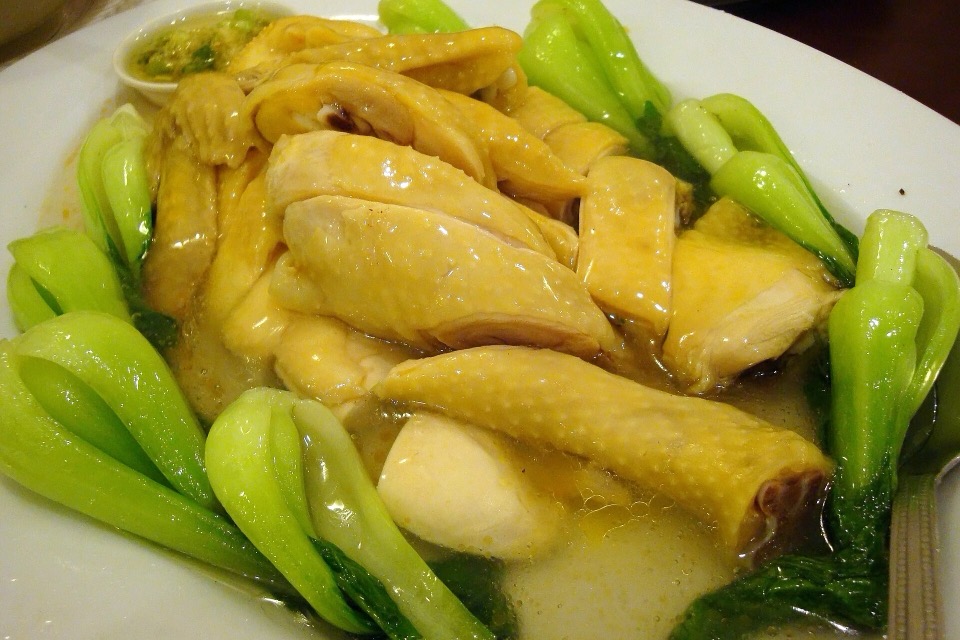
The same gentle method takes well to different aromatic profiles. For an Asian-leaning bath, swap the thyme for smashed ginger coins and scallion whites, then add a splash of rice wine—the resulting chicken is the base for dishes like Hainanese-style sliced chicken. For a Mexican-leaning batch destined for tacos or enchiladas, add a dried bay leaf, cumin seeds, cilantro stems, and a strip of lime zest. A simple lemon-herb bath (lemon slices, parsley stems, garlic) suits chicken meant for salads and cold plates. Keep additions aromatic rather than salty-heavy: strong soy sauce or miso in the liquid seasons the surface aggressively and makes the leftover broth harder to reuse.
Using Poached Chicken All Week
Poaching is the quiet workhorse of healthy meal prep because the meat comes out neutral, tender, and easy to portion. Shred it into grain bowls and tacos, dice it for chicken salad, or slice it over greens. For the juiciest storage, submerge cooled poached chicken in a few spoonfuls of its own broth inside an airtight container—it keeps 3 to 4 days refrigerated and reheats gently without drying out. Cook a Sunday batch alongside the modular components in make-ahead healthy lunches, and if you prefer browned flavor on another night, compare the method against the sear-and-cover approach in cooking chicken without drying it out.
Common Poaching Mistakes and Fixes
Rubbery, squeaky texture: the liquid boiled. Nothing repairs overcooked protein, but chopping it into a mayonnaise- or yogurt-based salad masks toughness. Pink center: pulled too early; return the breasts to the warm liquid for 3–4 more minutes and re-check the thickest point. Bland meat: the liquid was unseasoned; add salt to the poaching bath next time and let the chicken cool slightly in the liquid to reabsorb flavor. Waterlogged, washed-out taste: the chicken sat in the cooling liquid for hours; limit post-cook soaking to about 15 minutes.
Key Takeaway
Submerge chicken in salted, aromatic liquid, hold it at a bare 160–180°F shimmer with the lid on, and pull the breasts the instant the thickest point reads 165°F for poached chicken that stays tender enough to slice or shred all week.
Sources:
- USDA FSIS — Safe Minimum Internal Temperature Chart (U.S. Department of Agriculture)
- FoodSafety.gov — Safe Minimum Internal Temperatures (U.S. Department of Health and Human Services)