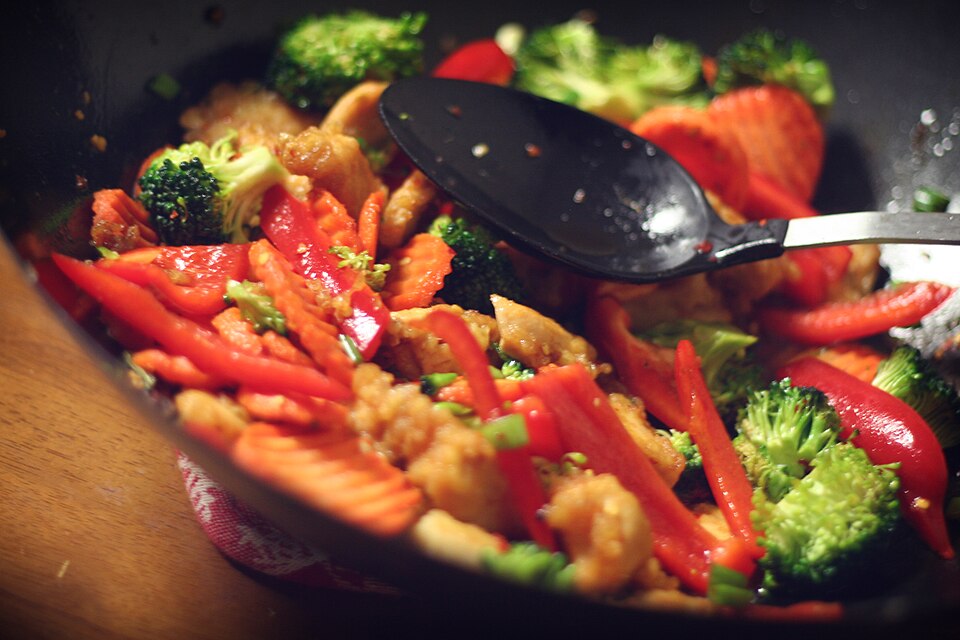
How to Stir-Fry Vegetables With Less Oil
Restaurant stir-fries often rely on several tablespoons of oil, but at home you can get blistered, crisp-tender vegetables with just 1 to 2 teaspoons of oil by preheating the pan properly, sequencing ingredients by density, and using a measured splash of water or broth.
Why Vegetables Soak Up Excess Oil in a Cold Pan
When you pour oil into a cool skillet and immediately dump in chopped eggplant, mushrooms, or broccoli, the oil remains thick and viscous. Porous vegetables act like sponges, absorbing the first tablespoon of fat before the pan ever reaches searing temperature. Prompted by dry-looking spots on the pan floor, many cooks reach for the bottle and pour in a second or third tablespoon—only for the vegetables to release that absorbed oil later and sit in a greasy pool.
Heating the dry pan first—until a drop of water dances and evaporates in two seconds—changes the physics completely. When you swirl 1 to 2 teaspoons of oil into an already-hot wok or skillet, the oil thins out immediately and spreads into an ultra-fine conductive film. When dry vegetables hit that hot film, their outer cells sear on contact rather than soaking up liquid fat. Moderation with cooking fats aligns with Dietary Guidelines for Americans recommendations while keeping weeknight meals light and crisp.
Best Pans and Oils for Low-Oil Stir-Frying
A 14-inch flat-bottomed carbon-steel wok is the gold standard because its sloped sides let you push nearly-cooked pieces up to a cooler zone while searing dense aromatics in the center well. If you do not own a wok, use a 12-inch wide stainless-steel, cast-iron, or hard-anodized skillet with flared sides. Avoid narrow, high-sided soup pots that trap moisture and force vegetables to stew.
Choose neutral oils with a smoke point of 400°F (205°C) or higher: avocado oil, peanut oil, refined canola oil, or high-oleic safflower oil. Save unrefined toasted sesame oil for a 1/2-teaspoon finishing drizzle after turning off the burner—its aromatic compounds burn quickly over high heat, yet a few drops at the end deliver rich nutty aroma without needing extra cooking oil.
Step-by-Step Low-Oil Stir-Fry Technique
Ingredient Sequencing Order: From Hard to Delicate
Adding every vegetable at the same time guarantees overcooked zucchini alongside raw carrots. Follow this four-stage entry sequence:
- Stage 1 (Minute 0:00 — Dense & Fibrous): Thinly sliced carrots, broccoli florets and peeled stems, cauliflower, green beans, and lotus root.
- Stage 2 (Minute 2:00 — Medium-Firm): Sliced bell peppers, asparagus, celery on a bias, shiitake mushrooms, and snow peas.
- Stage 3 (Minute 3:30 — Aromatics & Quick-Tender): Minced garlic, grated fresh ginger, scallion whites, zucchini half-moons, and bean sprouts.
- Stage 4 (Minute 4:30 — Leafy Greens & Finishing): Bok choy leaves, baby spinach, napa cabbage ribbons, scallion greens, and the pre-whisked sauce.
For more detail on keeping green vegetables vibrant and snappy across stovetop methods, see how to keep vegetables crisp when cooking or compare with steaming vegetables.
Building a Light, Glossy Pan Sauce
When you reduce cooking oil, a light cornstarch slurry gives vegetables that appetizing restaurant sheen without extra grease. Whisk together 1/4 cup of low-sodium vegetable or chicken broth, 1 tablespoon of reduced-sodium soy sauce or tamari, 1 teaspoon of rice vinegar, and 1 teaspoon of cornstarch. When poured around the hot wok perimeter, the starch gelatinizes in 20 seconds and clings to every floret rather than pooling watery at the bottom of the bowl. For more ways to layer savory umami without heavy sodium, read how to add flavor to food with less salt and explore Healthy Cooking Methods.
Common Low-Oil Stir-Fry Mistakes
- Adding wet vegetables straight from the colander: Surface water drops pan temperature immediately and causes oil to spatter. Spin washed greens in a salad spinner or pat florets dry with a clean kitchen towel before heating the wok.
- Pouring cold sauce into the center of the pan: Always pour liquid sauce around the scorching outer rim of the wok so it heats instantly on contact instead of cooling the center well.
Key Takeaway
Preheat your pan dry, measure 1 to 2 teaspoons of oil with a spoon rather than pouring freehand, sequence vegetables from dense to delicate, and use a 1-tablespoon rim splash of water for steam-searing without sogginess.
Sources:
- USDA Dietary Guidelines for Americans — Cooking Oils & Fats Overview (U.S. Department of Agriculture & HHS)