How to Stop Tofu from Sticking to the Pan
Find out why tofu sticks to pans and how to prevent it with proper draining, pan temperature, oil, and cooking techniques. Get better texture without messy sticking.
Why Tofu Sticks
Tofu is not naturally sticky, but its wet surface creates steam and its proteins can bond to a hot pan before a crust forms. A crowded pan adds another problem: the tofu releases water faster than the heat can evaporate it. The pieces simmer in their own liquid, then glue themselves to the surface when the liquid reduces. Sugary marinades and starch coatings can also burn before the tofu releases. The solution is a sequence rather than one magic ingredient: choose the right firmness, dry the surface, heat the pan and oil, leave space between pieces, and wait for browning before turning.
Match the Preparation to the Tofu
Extra-firm tofu is the easiest choice for cubes, slabs, and pan-seared pieces. Firm tofu can work but needs a little more care because it holds more water and breaks more easily. Soft and silken tofu are better for sauces, soups, and gentle dishes; pressing them like extra-firm tofu can destroy their texture. Drain the package, cut the tofu, and blot each face with a clean towel. A weighted press for 15 to 30 minutes can remove more water from extra-firm tofu, but a careful blot is enough for many weeknight recipes.
Dry the Surface Without Crushing It
Wrap tofu slabs in a clean towel or several paper towels and place a cutting board on top. Add a light weight, not a heavy stack that cracks the tofu. Replace the towel when it becomes soaked. For cubes, spread them on a towel and blot the sides rather than squeezing them. If you plan to use cornstarch, season the dry tofu first and toss it with a thin, even coating. Excess starch falls into the pan, burns, and becomes a second source of sticking. Dry pieces brown more quickly because the pan is working on a surface crust instead of boiling water.
Control Pan Heat and Oil
Preheat a nonstick pan over medium heat, a cast-iron skillet over medium to medium-high heat, or stainless steel until a drop of water skitters briefly and evaporates. Add enough oil to make a thin film across the cooking surface, then let the oil warm without smoking. Very high heat is not a shortcut: it scorches the outside while the wet center keeps steaming. A moderate, steady heat gives the crust time to form. If the oil pools on one side, tilt the pan or spread it with a brush before adding tofu so every piece starts on an equally coated surface.
Know What Each Pan Needs
A quality nonstick pan needs less oil, but it still benefits from preheating and a dry tofu surface. Avoid metal utensils that scratch the coating. Cast iron releases tofu well after it is heated and lightly oiled, especially when the tofu is left alone long enough to brown. Stainless steel is the most sensitive: preheat it properly, use enough oil, and wait for the browned crust to release naturally. If tofu feels welded to stainless steel, do not scrape immediately. Lower the heat slightly and give it another minute; the crust often releases when it is ready.
A Step-by-Step Sear
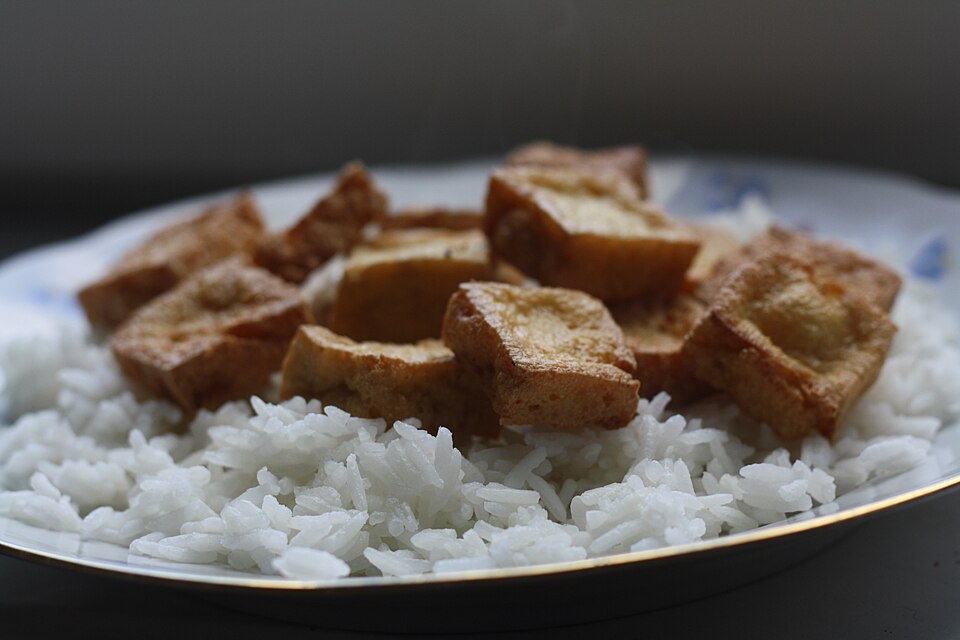
Cut tofu into pieces of similar thickness, blot them, and season or coat them lightly. Heat the pan, add oil, and place tofu with a little space between pieces. Lower the heat if the oil smokes. Do not poke or slide the tofu for the first 3 to 5 minutes, depending on thickness. Test one edge with a thin spatula. If it resists, wait; if the crust is golden, it should lift. Turn once and brown the next face. Add sauce after the tofu has developed color, because a wet sauce too early can steam the surface and loosen the crust.
When to Flip and When to Add Sauce
Flip tofu when the bottom is golden and the sides look drier, not when the clock says it is time. Thin slices may release sooner than thick cubes. Use a thin flexible spatula and approach from a shallow angle. If a piece breaks, the pan may be too crowded, the tofu may be too wet, or the crust may not be ready. Add salty or sweet sauces near the end so they do not burn. For a stir-fry, brown tofu first, move it to a plate, cook the vegetables, then return the tofu with the sauce. This pairs well with stir-frying vegetables with less oil.
Common Sticking Problems
If the tofu sticks everywhere, inspect the sequence. Wet tofu needs more drying; pale tofu that tears needs more time before flipping; dark tofu with a burnt coating needs lower heat and less sugary marinade. A crowded pan needs a second batch. If a nonstick pan has a damaged surface, replace it rather than compensating with excessive heat. Do not pour cold marinade over a pan full of hot oil because it can splatter. For more flavor without a heavy sauce, use the seasoning approach in how to make vegetables taste better and add the sauce only after browning.
A Reliable Tofu Habit
The most repeatable tofu routine is simple: firm tofu, dry surface, moderate heat, a thin oil film, space between pieces, and patience before the first flip. You do not need to press every block for an hour or use a thick layer of oil. Keep a plate nearby for browned tofu, and clean the pan while it is still warm so residue does not harden. Once this method becomes familiar, tofu can brown cleanly in a nonstick, cast-iron, or stainless-steel pan without relying on force.
A Short Pan Test
Before cooking the whole batch, test one tofu piece in the heated pan. It should make a quiet sizzle rather than hiss in a pool of water. After a few minutes, slide a thin spatula under one corner. If the corner lifts and shows a pale golden crust, the heat and oil are working. If the tofu tears, stop moving the other pieces, give them more time, and lower the heat if the exposed surface is darkening too quickly. This one-piece test prevents a full batch from failing because the pan was too cool or too crowded.
Tongs are useful for thick slabs, but a thin fish spatula is better for delicate cubes because it slides under the crust without levering the tofu upward. Keep the pieces in the same orientation while they cook so you can tell which sides have browned. If you are using a marinade, drain the tofu before it reaches the pan and reserve the liquid for the final sauce. A wet marinade poured over uncooked tofu turns the pan into a steamer and can loosen the crust before it has formed. Add the reserved liquid only after the tofu is browned and the heat has been reduced.
Step-by-Step Checklist
- Choose firm or extra-firm tofu and drain it well.
- Blot or press the surface, then coat lightly if using starch.
- Preheat the pan and spread a thin film of oil.
- Leave tofu undisturbed until the crust releases, then flip once.
Sources:
- USDA FoodData Central — Tofu (USDA FoodData Central)
- USDA Food Safety and Inspection Service — Leftovers and Food Safety (U.S. Department of Agriculture)
- Wikimedia Commons — TAHU_GORENG.jpg (Wikimedia Commons)